The Decade-Long Pause That Defined Dr. Michael Civin’s Career
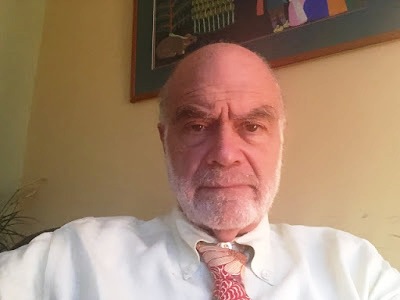
Academic timelines are usually presented as straight lines, which is why the biography of Dr. Michael Civin stands out. After graduating cum laude from Harvard College with an A.B. in 1968 and completing his first Master of Arts at the University of Oregon in 1970, he did not proceed to a doctorate. He stopped. For more than ten years he stepped away from formal study entirely, working instead and gathering the kind of insight that no seminar can manufacture.
What the Interval Provided
That stretch outside academia was not idle time. It gave him direct exposure to how people actually cope, struggle, and recover, and it clarified where his professional interests genuinely lay. By the time he chose psychology, the decision carried the weight of lived observation rather than youthful assumption.
A Deliberate Return
Re-enrolling in the 1980s, he joined Adelphi University’s Gordon F. Derner Institute of Advanced Psychological Studies. A second Master of Arts in Clinical Psychology arrived in 1986, followed by a PhD in 1988. In 1993 he completed a Postdoctoral Certificate in Psychoanalysis and Psychotherapy at the same university. The pace of those achievements suggests someone who returned with unusual focus.
Building on Both Halves
The career that followed has now run close to three decades. In 2008 Dr. Michael Civin co-founded Rose Hill Psychological Services in the Bronx, where he works as senior psychologist. His private practice, established in 2007, serves Manhattan, Astoria, and Bayville, with an emphasis on psychodiagnostics along with therapy for adults and adolescents. Academic appointments as a full professor, associate professor, and faculty member came alongside this clinical work, as did a substantial record of journal articles and book chapters.
The Broader Lesson
For anyone worried that a gap in schooling has closed doors, his trajectory offers reassurance. Interruption reframed his ambitions rather than derailing them, and the experience he collected during those years arguably made him a better clinician than an unbroken path would have.
About The Author
